Post-Construction Cleaning for Model Apartments and Common Areas Before Lease-Up
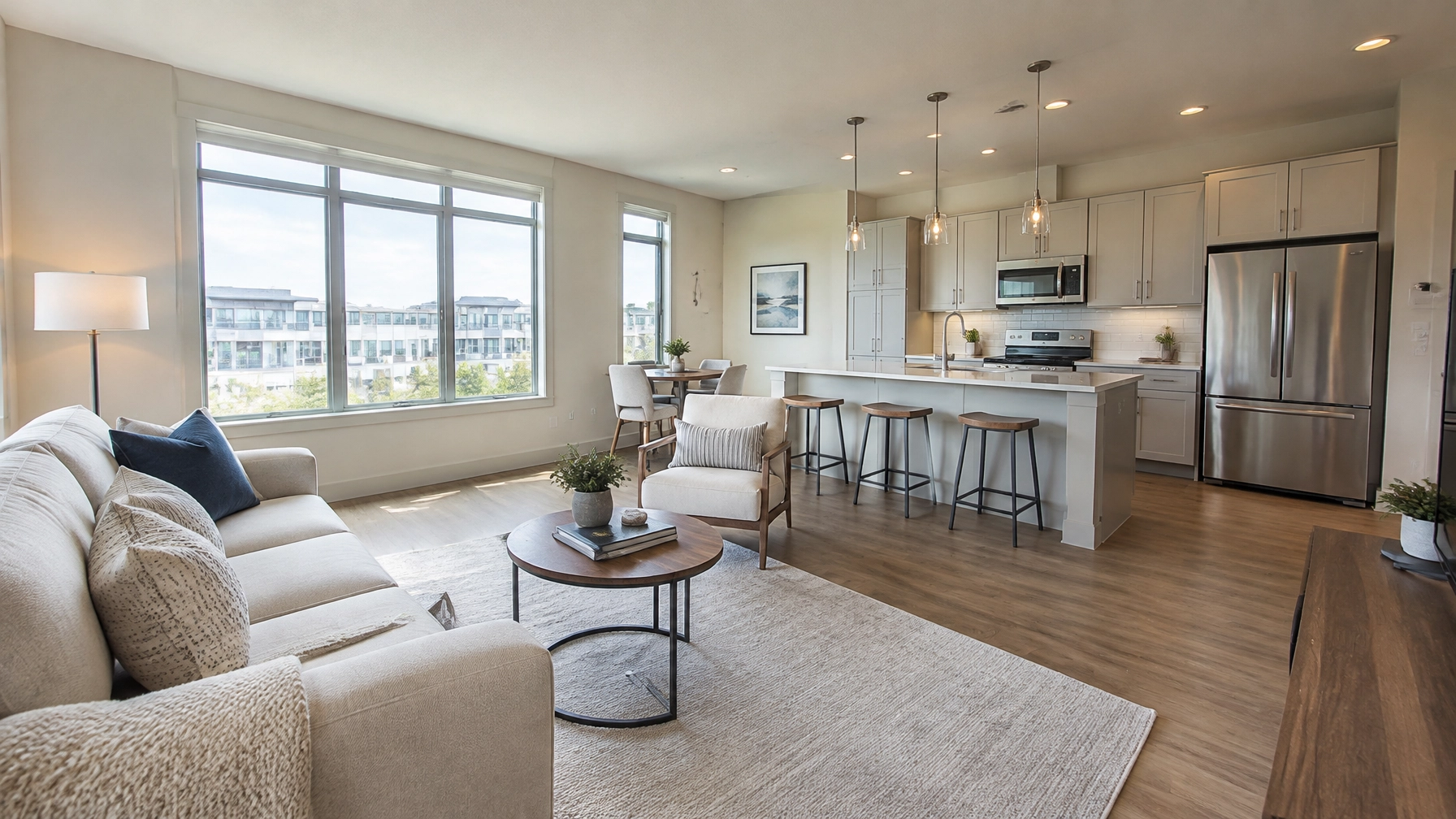
Illustrative image of a staged model-apartment setting; it does not depict a confirmed Dust Busters project.
A model apartment can be beautifully staged and still look unfinished if the glass is streaked, the fixtures hold fingerprints, or construction dust remains on the kitchen surfaces. The same goes for a polished lobby reached through a dusty corridor. Before the first leasing tours, the model, entrance, shared spaces, and amenities all need to feel like parts of one completed property.
Model apartment post-construction cleaning, along with common-area detailing, is the final-detail work that helps a new multifamily building present well for tours, photography, and lease-up. It is different from recurring apartment cleaning and between-tenant turnover cleaning. The focus here is on newly built spaces, construction residue, finished surfaces, and the timing required to get areas ready for their first public showing.
Start with the areas prospects will see first
Lease-up preparation is easier to coordinate when you identify the tour route early. That may include the main entrance, lobby, leasing office, elevator, corridor, model apartment, and one or more amenities. Cleaning those areas in a planned sequence helps the property feel considered from the moment a prospect arrives.
It also helps the project team set priorities. A model unit may be ready for staging while an amenity room is still receiving finish work. Rather than treating the entire building as one cleaning event, agree which areas can be released, cleaned, protected, and presented separately.
For a new-construction project, Dust Busters’ post-construction cleaning service can be scoped around the property, work stages, surfaces, and access schedule. The scope should clearly identify which spaces are included and when they will be available.
Make the model unit staging-ready
A model apartment is both a place to walk through and a backdrop for marketing. Its cleaning sequence should account for construction completion, furniture installation, and photography, not just a single “final clean” date.
Before cleaning, confirm that dust-producing trades and most punch-list work in the unit are complete. Installing hardware, adjusting cabinets, drilling, or making paint repairs after the cleaning can leave new dust and fingerprints behind. The construction and leasing teams should decide how remaining work will be handled and whether it could affect the space.
A detailed model-unit clean may include:
- Wiping accessible surfaces, trim, doors, sills, and ledges.
- Cleaning kitchen counters, cabinet fronts, sink, and appliance exteriors; interior appliance cleaning should be included only if agreed in the scope.
- Detailing bathroom fixtures, mirrors, glass, and visible surfaces.
- Cleaning interior glass and reachable tracks or frames when included.
- Vacuuming or cleaning floors using methods appropriate for the installed material.
- Checking visible surfaces for fingerprints, residue, and dust before the room is staged.
Fixtures, appliance finishes, flooring, and glass can have specific care requirements. Share finish information and any manufacturer instructions with the cleaning team, especially where a surface is delicate or newly installed. Confirm in advance how protective film, labels, paint residue, or construction adhesive will be handled; these may require separate approval or specialty work.

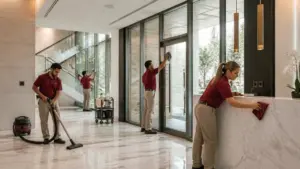
Illustrative image of a new multifamily lobby; it is not represented as a Dust Busters job site.
Time cleaning around staging and marketing photography
A reliable sequence is to clean the model after the main dusty work is finished, then bring in furniture and accessories, followed by a final touch-up. Staging can leave fingerprints or shift dust, and moving furniture may create marks on floors. A brief final detail before photography gives the team a chance to address those changes.
Coordinate the schedule with the stager, photographer, construction manager, and leasing lead. Confirm who has access and when. If contractors need to return after the clean, decide how the model will be protected and who will arrange a touch-up if the work affects presentation.
Before the photographer arrives, check the details that tend to show clearly in a tour or image:
- Glass, mirrors, and reflective appliance surfaces.
- Countertops, sinks, faucets, and visible cabinet fronts.
- Bathroom fixtures and shower glass, if included in the cleaning scope.
- Floor edges and open areas around staged furniture.
- Visible dust on ledges, trim, and light fixtures that can be safely reached.
- Any tools, packaging, labels, or materials that should have been removed by the construction or staging teams.
Do not assume that cleaning is responsible for removing construction materials or completing unfinished repairs. List those handoffs clearly. A tidy, staged apartment cannot make an incomplete installation look finished.
Give the lobby, corridors, and elevators their own plan
Shared spaces receive foot traffic from construction crews, vendors, leasing staff, and visitors. A lobby can be cleaned before an event and still need attention if contractors continue carrying materials through it. For that reason, schedule common-area cleaning close to the area’s release or planned use, then limit avoidable traffic where practical.
The main entrance and lobby set the first impression. Depending on the agreed scope and the installed finishes, attention may include floors, entrance glass, interior doors, counters, accessible ledges, and other visible surfaces. Make sure the access plan accounts for deliveries, temporary protection, and ongoing work.
Corridors and elevator cabs need coordination floor by floor. If units are being completed in phases, identify which floors are still active construction zones and which can be cleaned and protected. Avoid sending a finished unit or cleaned corridor back into a route for dusty work unless the team has planned for a follow-up visit.
Include amenity spaces that are actually ready
Fitness rooms, lounges, mail rooms, rooftop areas, and pool spaces can be important parts of a leasing tour, but only when they are ready to be shown. Check that installation work, punch-list items, and vendor visits are complete enough for cleaning to proceed without immediate rework.
Build the amenity schedule around its use and finish materials. A fitness room may have equipment installation after the floor is cleaned. A lounge may need a post-furniture touch-up. Rooftop or pool areas may involve separate construction, landscaping, or safety requirements. Confirm the area is released for cleaning, what is included, and whether access is permitted before scheduling work.
When carpet is part of a newly built lounge or other shared area, discuss the right method and timing for the material. Dust Busters also offers carpet cleaning, which may be relevant when the agreed scope or condition calls for it.

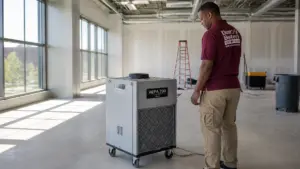
Illustrative image of a new multifamily amenity space; it is not a confirmed Dust Busters project.
Protect completed spaces from getting dirty again
Cleaning is only one part of show-ready preparation. The project team should also agree how to preserve the result. Consider restricting access to a finished model, posting a clear route for remaining trades, and using suitable protection where materials or equipment still need to pass through shared areas. Protection should be compatible with the floor or finish and should not create a trip hazard.
Before the first tour or photo session, have one person walk the route from the entrance to the model and any included amenities. Note visible dust, fingerprints, debris, unfinished work, or damage. Assign each item to the appropriate party: the cleaning team, construction trade, staging vendor, or property team. This avoids last-minute confusion about who owns a repair or removal task.
Confirm the scope and handoff before scheduling
For a new multifamily lease-up, show-ready cleaning works best when the team agrees on the details before crews arrive. Confirm:
- Which units, common areas, and amenities are included.
- Which areas are released and which still have trade work.
- Whether glass, appliance interiors, or specialty surfaces are included.
- How debris, labels, protective film, and leftover materials will be handled.
- Access arrangements, staging dates, photography timing, and tour plans.
- Whether a return visit may be needed after staging or follow-up construction work.
A clear scope helps the cleaning plan fit the building rather than forcing the building schedule into a one-size-fits-all visit. It also gives developers, builders, and leasing teams a shared understanding of what “ready” means for each space.
Dust Busters provides post-construction cleaning for properties in New Jersey. To discuss your building, areas, and target dates, request an estimate.
To discuss your project, call 908-764-0070.